


Taittinger Brut Réserve NV (Gift Box)
Style: Champagne Brut
Varieties: Chardonnay (40%), Pinot Noir (35%), Pinot Meunier (25%)
Closure: Cork
Taittinger Brut Réserve NV (Gift Box)
Warehouse
34 Redland Drive
Vermont VIC 3133
Australia
Producer: Taittinger
Country: France
Region: Champagne
Vintage: Non Vintage
Critic Score: 94
Alcohol: 12.5% Dosage: g/l
Size: 750 ml
Drink by: 2028
James Halliday Top 100 Wines of 2023
Taittinger’s new chef de cave, Alexandre Ponnavoy, who took over from Loïc Dupont in May, has the challenging task of maintaining the house’s signature lively style. One of the most delicate brut non-vintages on the market, thanks to its high Chardonnay content, 60% of the grapes that go into Taittinger Brut Réserve hail from grands and premiers crus sites. First released in the 1930s, today 30% of the blend is made up of reserve wine, and is aged on its lees for three years before release. It typically takes seven months to create.
"As it happens I’ve had it a number of times over the past month or two and one thing I’ll say about it is this: serve it beside anything remotely down the pecking order and it smashes it for quality: it’s got breadth and finesse and length, and it drinks better out of a wine glass than it does from a flute. It’s 40% chardonnay but the pinot dominates, with a strawberried, pippy, almost cocoa-ed deliciousness to its leesy style. This is a really good NV, and I’ll be buying more of it." Campbell Mattinson
"The process of making vintage and non-vintage is different because we don’t want to tell the same story in a brut non- vintage as we do in a vintage. A brut non-vintage is a consistent cuvée that acts as a house’s trademark. The biggest challenge is to understand the different wines destined for the blend to have a clear vision of the expression at the time of its launch," says Ponnavoy.
Expert reviews
"Taittinger Brut Réserve NV has the largest family-owned vineyards in Champagne. This wine is 40% chardonnay, and 60% pinot noir and pinot meunier – 30% of it from reserves. It matured on yeast lees for at least three years. Balance is key, in the white flowers/peaches of the bouquet and the honey and vanilla of the palate." James Halliday, Halliday Wine Companion - 94 points and Top 100 Wines of 2023
"As it happens I’ve had it a number of times over the past month or two and one thing I’ll say about it is this: serve it beside anything remotely down the pecking order and it smashes it for quality: it’s got breadth and finesse and length, and it drinks better out of a wine glass than it does from a flute. It’s 40% chardonnay but the pinot dominates, with a strawberried, pippy, almost cocoa-ed deliciousness to its leesy style. This is a really good NV, and I’ll be buying more of it." Campbell Mattinson, The Wine Front - 93 points
Awards
James Halliday Top 100 Wines of 2023
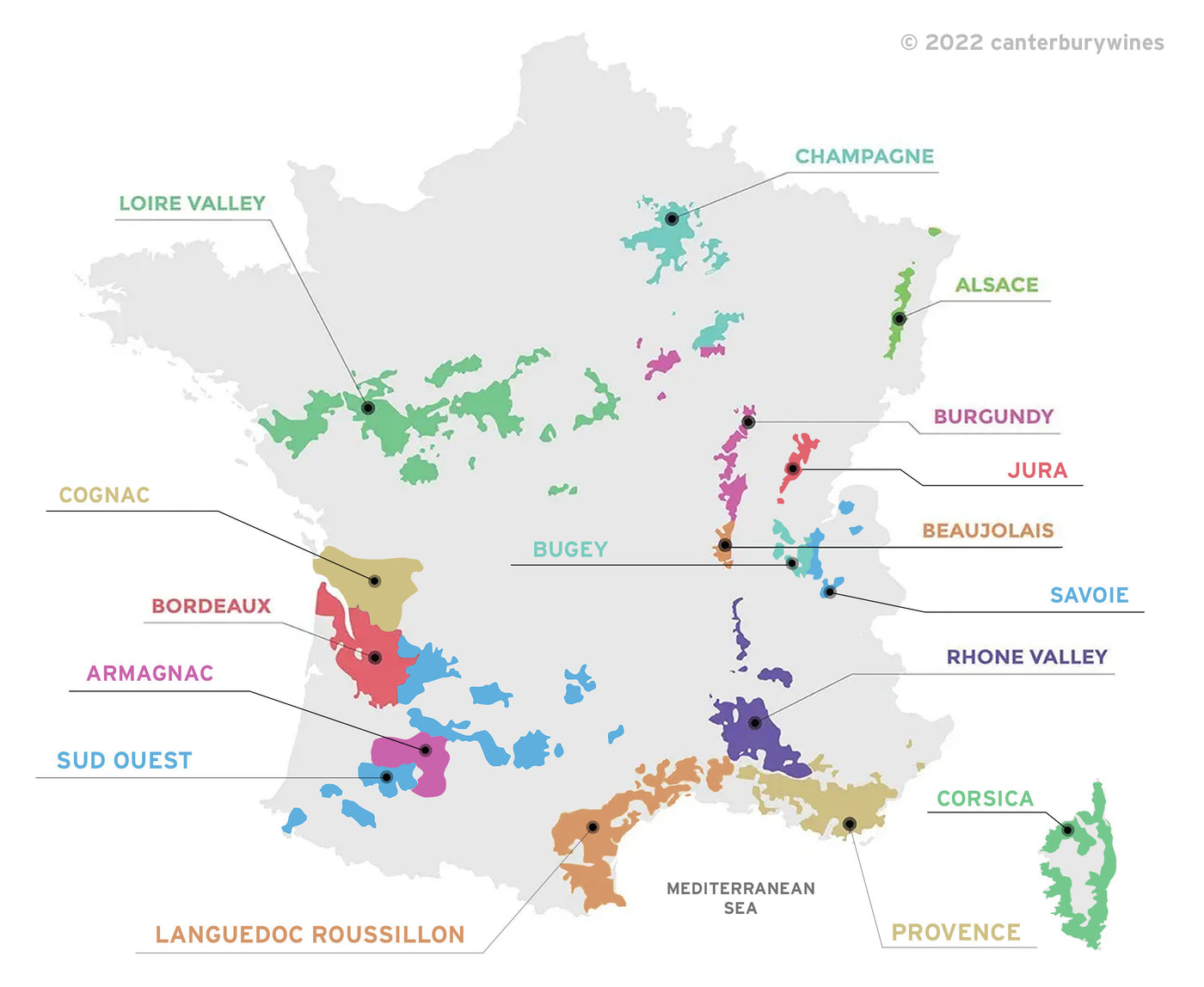
France
There are 16 major French wine regions, each known for their own unique grape varieties, terroir and wines. They are Alsace, Armagnac, Beaujolais, Bordeaux, Bugey, Burgundy, Champagne, Cognac, Corsica, Jura, Languedoc- Roussillon, Loire Valley, Provence, Savoie, South-West and the Rhône Valley.
The largest region is Languedoc- Roussillon, the oldest is Provence, the most influential and famous are Bordeaux, Burgundy, Champagne, Loire Valley and the Rhône Valley.
French wine is labelled by wine region or appellation rather than by grape variety (except in Alsace). In order to guarantee the quality and provenance of French wines, the French government established the Appellation d'origine contrôlée (AOC) system. Under this system the wine label indicates the geographical origin, quality and, generally, the style of a wine. Many regions are home to multiple appellations; for example, the prestigious Bordeaux region in the southwest of France has over 60 growing appellations.